

Dear students of Serbia, I owe you an apology.
For two years I watched you with genuine admiration. The blockaded faculties. The sixteen minutes of silence that stopped traffic every day at 11:52, the minute the canopy fell in Novi Sad. The marches through the country, the bicycles and running shoes that carried your demands across Europe to the doors of the EU institutions. Few movements anywhere have shown such stamina, such discipline and such dignity.
And yet I did not believe you had a proper theory of change in your books. I saw protest. I saw movement building. What I could not see was how a crowd without leaders, without a party and without a single face on a poster would ever dislodge a regime that controls the airwaves, the police and the public purse. Privately, I filed you under magnificent but doomed.
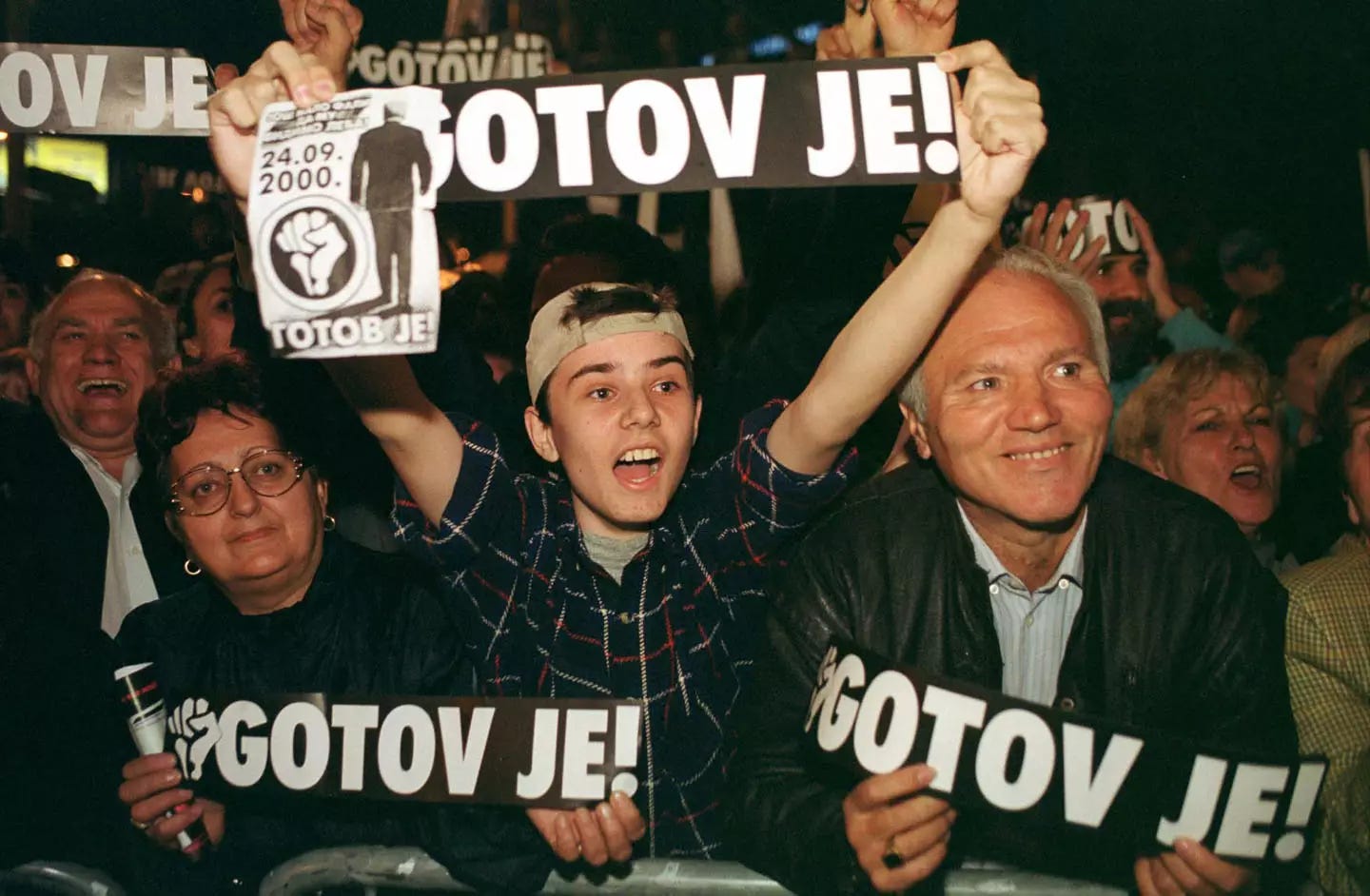
Yesterday you proved me wrong. Like Otpor in 2000, you have taught democratic forces around the world a lesson in innovative, non-violent resistance. The humbling part is that the thing I mistook for your weakness turned out to be your greatest strength.
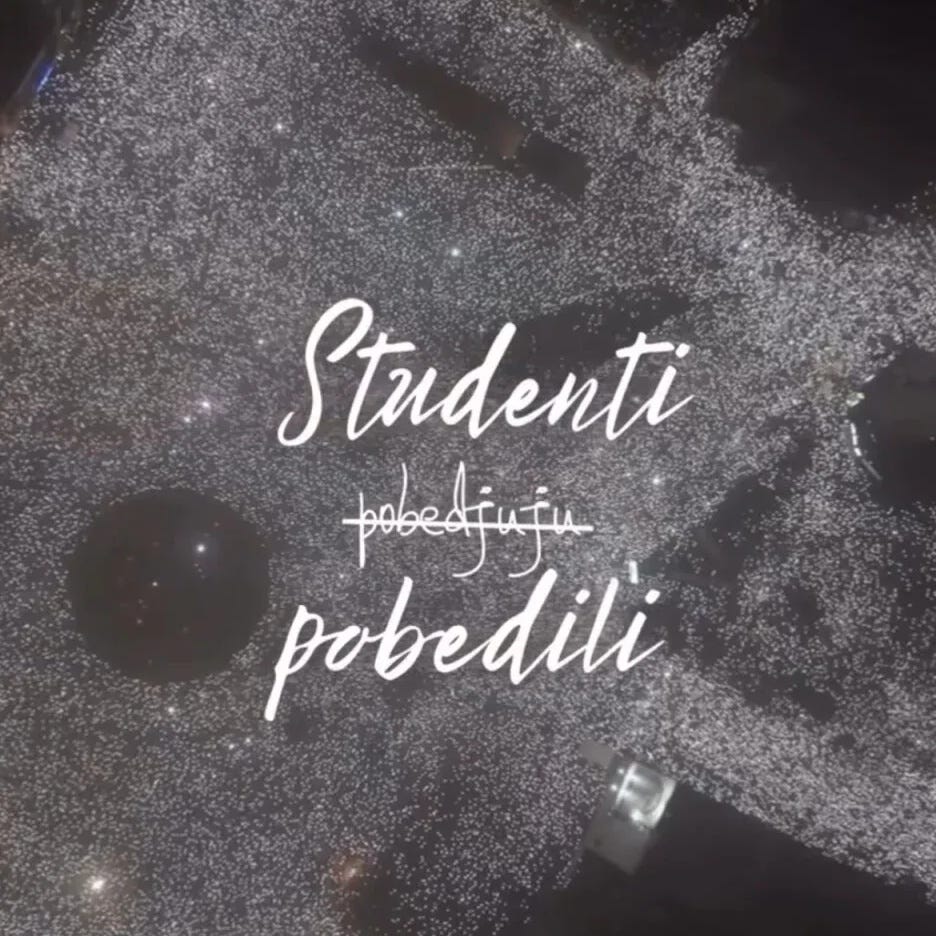
Studenti su pobedili – the students won.
Gotov je! He’s finished
On Sunday evening, about an hour and a half after the polls closed, Aleksandar Vučić stood in front of his supporters and admitted defeat for the first time in fourteen years of rule: “The Students’ List has won.” The electoral commission’s preliminary results, published this morning with 96 percent of polling stations counted, give the Students’ List 52.5 percent of the vote against 39.3 percent for Vučić’s United Serbia. According to a projection by the monitoring group CeSID, that means 140 of the 250 seats for the students and 103 for his camp. Turnout reached 68.8 percent, the highest since the breakup of Yugoslavia.
It did not have to end this way. All day, the stage was being set for a very different night. Riot police cordoned off the streets around the election commission in central Belgrade. Special police vehicles gathered near Ćaciland, the camp of regime loyalists squatting in a park in the city centre for more than a year, and large groups of black-clad men assembled at various points across the city. Everyone knew what such men are for. Earlier this year, local elections in ten municipalities were marred by violent attacks on journalists and activists, and the students themselves have been detained, surveilled and branded terrorists and foreign agents for two years.
Then Vučić conceded, blaming independent media, unnamed European governments and an American deep state for his defeat. Hungarians have seen this film before. On the night of 12 April, Viktor Orbán, too, had the instruments for a less graceful exit within reach, and he, too, conceded. Péter Magyar was quick to congratulate the students yesterday, noting that Hungary’s April victory had given them strength in their struggle.
Neither man discovered a love for democracy at the last minute. Strongmen concede when the margin is too wide to steal and the price of trying exceeds what their own apparatus is still willing to pay. Making that price prohibitive is the whole art. By midnight, the crowds were dismantling the tents of Ćaciland.
The theory of change I missed
What I took for a lack of strategy was the strategy. From the first weeks of the blockades, the students replaced their old student parliaments with plenums: general assemblies, faculty by faculty, where every major decision is debated and voted on, often for hours. Working groups handle strategy, donations and security, while universities in different cities coordinate to keep their demands aligned. The rules are few and strict: no leaders, no violence, and every protest site is left clean.
Anyone who has sat through a general assembly knows how exhausting this is. Endless debates, procedural quarrels, decisions that take a week instead of an hour. But look at what it denied the regime. Vučić’s propaganda machine, like Orbán’s, is built for one job: the personal destruction of opponents. With spokespeople rotating, nobody rose high enough to be worth a smear campaign. There was no leader to discredit on the evening news, to arrest on a pretext, to buy off with a ministry or to visit at night. In a country where the government stands accused of letting corruption and organised crime flourish, that last point is not a figure of speech.
The plenums also answered the question that has haunted leaderless movements for a decade, and that analysts raised about Serbia too: how to keep a horizontal crowd united once the adrenaline wears off. They gave the movement memory and discipline. They chose the parliamentary candidates and wrote the rulebook those candidates must follow. Otpor, for all its brilliance, ended up as a conventional party that won 1.7 percent in 2003. Today’s students have so far refused that path.
A student in every village
The second lesson is about geography and class. Serbia’s universities are not finishing schools for Belgrade’s professional elite. A large share of students come from small towns and villages, from families with no academic tradition. When the faculties shut down, these students went home and took the protest with them: to their parents’ kitchens, their grandparents’ villages, the market squares of towns where no opposition politician had set foot in years. Taxi drivers ferried them back to their hometowns after the big rallies. The regime’s story of a “protest of the privileged” never stood a chance against a farmer’s grandson explaining the canopy collapse at the family table.
Later this became method. Under the banner “A student in every village”, students went door to door because, as one organiser put it, talking face to face is something entirely different from talking through networks and media. They deliberately targeted the ruling party’s rural strongholds and recruited high-school pupils and their parents. In the village of Darosava, a local engineering student described how surprised residents were to find students on their own doorstep, and how quickly the image of foreign-paid traitors peddled by pro-government media fell apart.
This should make every democratic campaigner sit up. Right-wing authoritarians have perfected what Steve Bannon calls flooding the zone: drown the public in so much noise, so many lies and so much outrage that people stop trusting anything they see on a screen. Hungary’s April election was the EU’s most advanced laboratory of this approach, with Fidesz running a campaign built almost entirely on AI-generated fear. Déjà vu, anyone? It only half worked, not least because so much of Tisza’s campaign took place in village halls and on the main squares of small towns rather than online.
Here lies the paradox. The more polluted the digital space becomes, the more valuable the oldest medium of all. When nobody believes the news any more, the most credible channel left is a familiar face at the door. Your granddaughter. The neighbour’s son who studies engineering in Niš. No algorithm can fake that, and no propaganda ministry can flood it.
Winning without running
The third lesson is the hardest for any movement: knowing what not to do. Having built the most powerful political force in the country, the students kept themselves off the ballot. Not one of them is on the list. Instead, the plenums assembled 250 candidates from across Serbian society: doctors, academics, teachers, actors, economists, farmers and athletes, most of them without political experience. At the top stands a cardiologist, Ilija Srdanović. Dozens of expert working groups drafted the programme, and the one involving physicist Slobodan Bubnjević alone produced an action plan of over 200 pages.
This did three things at once. It disarmed the regime’s favourite attack line, that the country was about to be handed to inexperienced kids. It offered voters a governing alternative drawn from the professions people trust most. And it made alliances possible without the usual ego wars: several established opposition parties stood aside and backed the students instead of fielding their own lists. The campaign stayed on corruption, accountability and the rule of law, keeping divisive foreign-policy questions at arm’s length.
That breadth has a price, and it falls due now. Candidates on the list have taken a hard line on Kosovo and even floated a referendum on EU membership. Governing will force the choices that campaigning could postpone. And the plenums face their own test: before the vote they could strike a name off the list, but they cannot take back a seat.
Corruption, the common denominator
It all began with sixteen dead. On 1 November 2024, the freshly renovated canopy of Novi Sad railway station came down on the people beneath it. Prosecutors have since indicted former minister Goran Vesić and twelve others, and Belgrade’s anti-corruption prosecutors brought separate charges for corruption offences that led to the collapse. The key contract with the Chinese consortium behind the works was missing from the documents the government published.
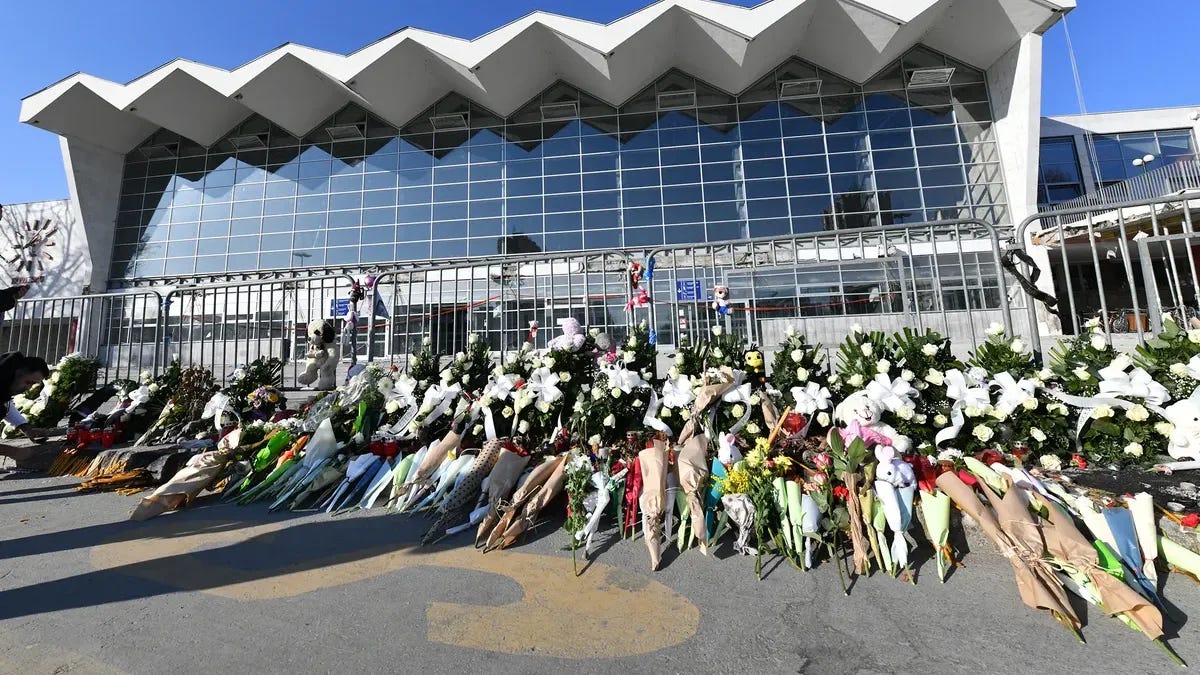
In Serbia, corruption stopped being an abstraction the day concrete fell on commuters. That is exactly why it is the most dangerous issue for regimes of this kind, from Belgrade to Budapest and beyond. Corruption is the glue of right-wing authoritarianism. It buys the loyalty of oligarchs, police chiefs and local party bosses, and it binds strongmen to each other through deals that cross borders: Vučić courted the Trump family, and a Belgrade development involving Jared Kushner became mired in controversy. Orbán’s Hungary turned the same logic into a model of statehood.
But glue is also a weakness. Culture wars are fought on screens, endlessly, without anyone ever meeting the enemy. Corruption is experienced: in the crumbling hospital, the late train, the contract that went to the mayor’s brother-in-law. It is the one issue that unites the left-wing student in Belgrade with the conservative pensioner in a village in Šumadija. Culture war is the smoke. Corruption is the fire, and it remains the authoritarians’ most obvious Achilles heel.
Why the world should pay attention
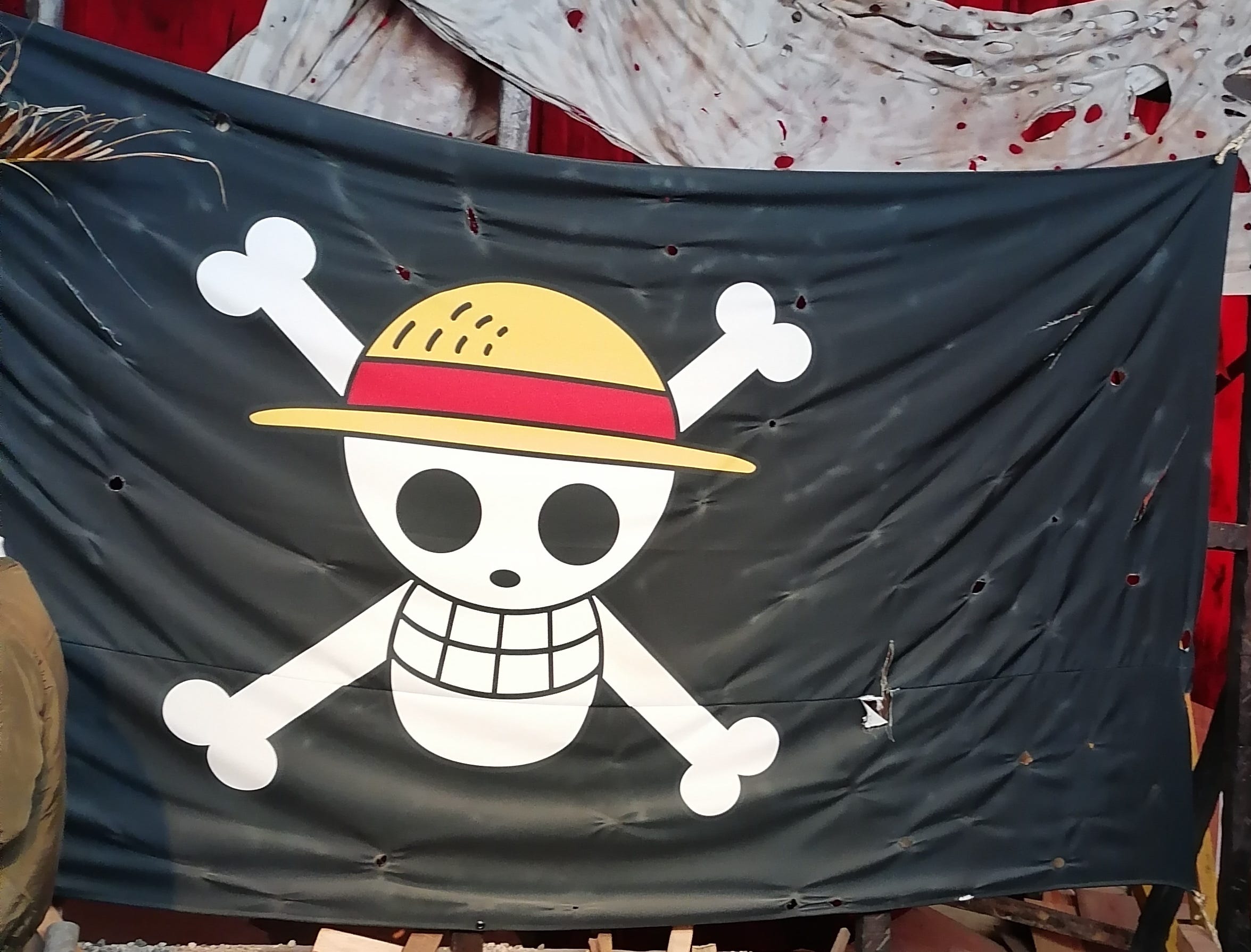
Serbia is not an isolated case. Gen Z-led protests have broken out in well over a dozen countries since 2025, and governments have fallen in Bulgaria, Madagascar and Nepal. The triggers differ: a social media ban in Nepal, power and water cuts in Madagascar, World Cup stadiums rising while hospitals decay in Morocco. The pattern does not: corruption, a generation priced out of a decent life, and a deep distrust of leaders, including their own. These movements learn from each other in real time. Activists in Madagascar studied tactics on Nepal’s Discord servers, and the pirate flag from the One Piece manga now flies from Kathmandu to Antananarivo.
Not every story ends like Belgrade’s. In Madagascar, the young protesters forced out the president only to watch the military take over, and they were shut out of the transition they had made possible, as youth movements in Bangladesh were before them. Nepal points the other way: in March, a party founded only four years earlier won a landslide in the first election after the uprising, and a 35-year-old former rapper became prime minister. Serbia now adds the most complete version yet: a movement that closed the whole loop from the street to the ballot box to a parliamentary majority, without handing its revolution to generals or to the old parties.
Seen from Western Europe, Gen Z revolt can look like a familiar ritual: barricades in Paris, tear gas, a weekend of headlines, then business as usual. That image misleads. What is emerging from Kathmandu to Belgrade is a generation that has stopped asking strongmen and oligarchs for better treatment and started organising to replace them. It does so horizontally, across borders, with no leaders to decapitate and an almost puritan suspicion of anyone who wants to become one. That is a far more fundamental challenge to the current world order than any burning car.
The students ran under a simple slogan: Studenti pobeđuju, students win. And win they did. Sorry I doubted you, and thank you for the lesson.
PUMPAJ! ✊
Image credits
“Studenti pobedili”: @severina on Instagram
Memorial at Novi Sad railway station: Nova.rs
“Gotov je!” celebration, 2000: Imre Sabo
One Piece flag: RootOfAllLight / Wikimedia Commons, CC BY 4.0
Thank you for your outstanding summary and analysis.